The economics degree is still a powerful signal. But in 2026, it is no longer enough on its own. Employers hiring economists across government, central banks, consulting, tech, and finance are converging on a clear profile: someone who can turn data into decisions, defend methods under scrutiny, and communicate results to non-economists without losing rigor.
This shift is not a fad. It reflects how economic work is produced today: larger datasets, faster policy cycles, and higher expectations for transparency. The result is a modern skill stack that blends econometrics, data engineering, domain expertise, and professional writing.
The 2026 baseline: reproducible work is a hiring requirement
Before talking about advanced techniques, start with the new baseline. Employers want economists whose work can be rerun, audited, and extended by someone else. In academia, this expectation is formalized. The American Economic Association requires data and code availability and conducts reproducibility checks prior to acceptance for its journals. In practice, this mindset is spreading well beyond publishing. Policy institutions and private-sector teams also need analysis that survives handoffs, turnover, and compliance reviews.
If you want one practical reference for what “professional-grade” empirical work looks like, Gentzkow and Shapiro’s guide remains a classic: automate your pipeline, use version control, structure your directories, and document decisions so collaborators can move quickly without breaking results.
Skill #1: Causal inference that works in real world constraints
Employers do not hire economists to run regressions. They hire economists to answer “what caused what” and “what should we do next.” That is why causal inference remains the cornerstone of marketable economics in 2026.
- Identification literacy: You can explain threats to validity and how you addressed them, not just cite an estimator.
- Experimental thinking: You know when randomized evaluation is feasible, and when it is not, and what second-best looks like.
- Quasi-experimental toolset: Difference-in-differences, event studies, IV, RDD, synthetic controls, and credible robustness strategies.
- Decision framing: You translate estimates into implications, including uncertainty, trade-offs, and monitoring indicators.
In interviews, this shows up as case questions and “walk me through your design” prompts. The strongest candidates speak clearly about assumptions, data limitations, and what would change their mind.
Skill #2: Data science fluency without losing the economist’s advantage
Economists are increasingly competing with data scientists for the same roles. The winning strategy is not to imitate a generic machine-learning profile. It is to combine strong empirical design with modern tooling. According to the World Economic Forum’s skills outlook, AI and big data rank among the fastest-growing skill areas, alongside broader technology literacy. For economists, that translates into practical competence rather than hype.
- SQL and relational thinking: You can query, join, and validate data without relying on manual exports.
- Python or R in production mode: Not just notebooks, but reusable scripts, environments, testing, and packaging.
- Feature engineering with judgment: You create variables that map to theory and institutions, not only to predictive lift.
- Model evaluation: You can discuss bias-variance trade-offs, leakage, and why performance metrics must match the decision context.
The most employable economists in 2026 are “bilingual” in inference and computation. They can build a clean pipeline, then argue whether a result is credible and policy-relevant.
Skill #3: AI literacy, model governance, and responsible analytics
AI tools are now part of the analyst’s daily environment. Employers increasingly expect economists to understand what these systems can and cannot do. This is not about becoming an AI engineer. It is about being the person in the room who asks the right questions: What data generated this output? What breaks when the environment shifts? How do we monitor drift? Where could bias enter the pipeline? Employers expect economists to be the “ethical compass” of the data pipeline. This requires blending behavioral economics with AI oversight:
- Algorithmic Bias: Identifying where training data reflects historical inequities and embeds them into economic decisions.
- Agent Psychology: Understanding how AI-driven systems such as automated pricing or credit scoring reshape human behavior and incentives.
- Explainability: Moving beyond black-box models to deliver intuition-based transparency for regulators, decision-makers, and stakeholders.
In regulated settings, the conversation extends to governance: documentation, explainability, validation, and the ability to defend decisions to auditors or leadership. The economist’s comparative advantage is disciplined skepticism backed by measurement.
Skill #4: Domain expertise that matches the employer’s problem set
General competence is table stakes. Differentiation comes from domain mastery. Employers hire economists to make decisions inside specific systems: inflation dynamics, credit risk, labor markets, competition policy, energy transitions, health systems, or development programs.
The highest-value domain expertise in 2026 tends to share two traits: first, it is grounded in institutions and data realities, not only theory; second, it connects micro evidence to macro or strategic implications.
- Central banks and regulators: monetary transmission, financial stability, stress testing, market microstructure, supervision data.
- Consulting and policy shops: program evaluation, industrial policy, cost-benefit analysis, stakeholder constraints.
- Private sector: pricing, demand estimation, experimentation, causal measurement of interventions, risk and fraud analytics.
- Climate and energy: carbon policy design, climate risk, adaptation investment appraisal, transition pathways.
- Sustainability and ESG impact: Mastering carbon accounting, climate risk modeling, and the measurement of social impact. As non-financial reporting becomes mandatory, the ability to quantify “externality pricing” is a high-demand niche.
The practical point is simple: a candidate who can speak the employer’s “native language” in the first interview often outperforms a more generic profile with a stronger transcript.
Skill #5: Communication that survives the real world
Employers do not just want correct analysis. They want analysis that gets used. The Occupational Outlook Handbook lists communication as a core quality for economists, alongside analytical skills. In 2026, that is even more true because economists increasingly brief mixed audiences: executives, policymakers, engineers, journalists, and non-technical stakeholders.
- Write like a decision memo: headline, recommendation, key evidence, risks, and what to monitor next.
- Explain uncertainty: ranges, scenario thinking, and what assumptions drive the result.
- Visual reasoning: clean charts, readable tables, and narrative consistency between text and evidence.
- Policy translation: “What does this mean for rates, budgets, households, or firms?” in plain language.
If your work cannot be summarized clearly in a one-page brief, many employers assume you do not fully own it. Communication is not a soft add-on. It is part of the craft.
Skill #6: Adaptive problem solving and professional judgment
The OECD’s recent work on skills emphasizes adaptive problem solving: the ability to reach goals in dynamic situations where the solution method is not obvious. That is a fair description of most applied economics roles. Real projects come with imperfect data, shifting requirements, and institutional constraints.
Hiring managers watch for judgment under uncertainty: how you choose a method when time is limited, how you validate messy inputs, and how you decide what is “good enough” without compromising integrity.
Skill #7: Navigating Political Economy and Global Regulation
In a theoretical model, the optimal solution is easy to find. In the real world of 2026, even the most rigorous analysis is limited by institutional and geopolitical realities. Employers are increasingly seeking economists with Political Economy Intelligence, which is the ability to understand how power, policy, and markets intersect.
- Geopolitical Literacy: As global supply chains prioritize resilience over efficiency, economists must account for geopolitical risks. This involves quantifying how industrial policies, trade tensions, or regional shifts impact long-term strategic decisions.
- The Regulatory Landscape: With the maturity of the AI Act and global carbon markets, economists must build models that are compliance-aware. You need to understand not just what the data says, but what the law allows, especially regarding data privacy and ESG reporting standards.
- Institutional Feasibility: A recommendation is only useful if it is politically viable. The modern economist identifies winners and losers to suggest strategies that align with stakeholder interests and institutional constraints.
The most successful economists recognize that markets do not exist in a vacuum. They are shaped by institutional rules and human policy as much as by the laws of supply and demand.
How to prove these skills to employers in 2026
Employers cannot hire potential. They hire evidence. The candidates who convert offers typically bring proof in three formats: a reproducible project, a writing sample, and a clear story.
- A reproducible portfolio project: one repository with a clean README, automated pipeline, and outputs that regenerate end-to-end.
- A decision-focused writing sample: a two-page memo that turns analysis into a recommendation, written for a non-technical reader.
- Interview-ready narratives: one story about rigor (how you ensured credibility), one about impact (how your work changed a decision), and one about collaboration (how you handled constraints).
This is where many applicants lose. They list skills, but they cannot demonstrate them quickly. In 2026, the fastest way to stand out is to make your work easy to inspect.
The bottom line for 2026 economist hiring
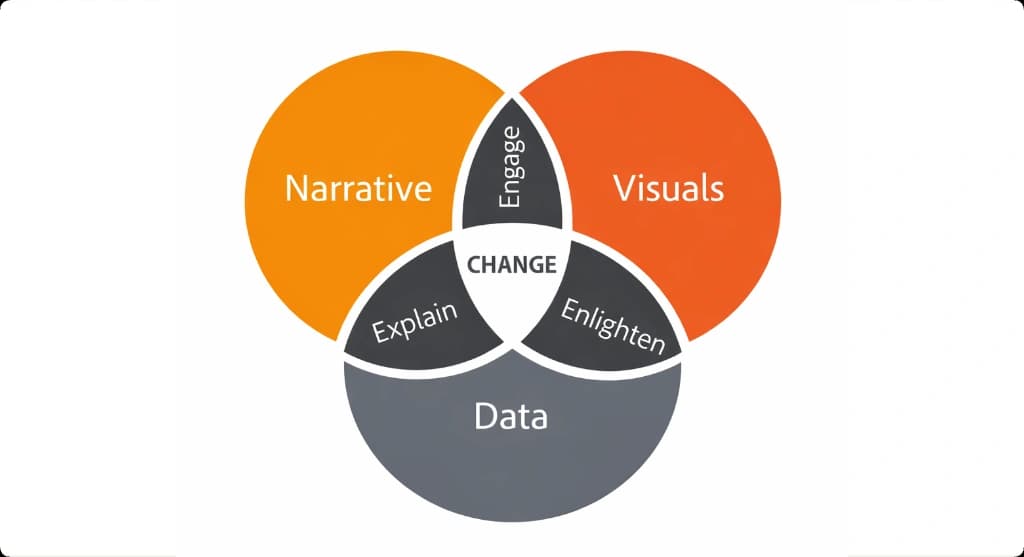
The market is rewarding economists who are both rigorous and operational. The most in-demand skill set is not a single technique, but a professional bundle: credible causal reasoning, data fluency, responsible AI literacy, domain knowledge, and clear communication. Build these deliberately and you will be competitive across academia, policy institutions, and the private sector.
On Econ-Jobs.com, these trends show up in the language of postings: reproducibility, coding standards, stakeholder communication, and applied measurement are no longer “nice to have.” They are the job.
Selected Sources
- U.S. Bureau of Labor Statistics, Occupational Outlook Handbook: Economists
- American Economic Association, Data and Code Availability Policy
- Gentzkow & Shapiro (2014), Code and Data for the Social Sciences: A Practitioner’s Guide
- World Economic Forum (2025), Future of Jobs Report 2025
- OECD (2025), OECD Skills Outlook 2025