Please note that this article is not sponsored. While we focus on OpenAI today, other AI models will inevitably release similar tools; our goal is simply to highlight the new approach and the productivity gains for researchers.
Table of Contents
- What Is OpenAI Prism and Why Does It Matter for Economists?
- The Unique Pain Points of Economics Paper Writing
- How Prism Addresses These Challenges
- OpenAI Leads, But Competitors Will Follow
- The Limits of AI Assistance in Economic Research
- Implications for the Economics Job Market
- Practical Considerations for Getting Started
- The Future of Paper Writing
Writing an economics research paper has always been a test of endurance.
Between wrestling with LaTeX formatting, managing hundreds of bibliographic references, converting Stata or R outputs into publication-ready tables, and ensuring every equation aligns perfectly, the technical burden often overshadows the intellectual work. For PhD candidates on the job market, assistant professors chasing tenure, and policy economists racing against deadlines, these friction points can consume dozens of hours that would be better spent refining arguments or strengthening empirical identification.
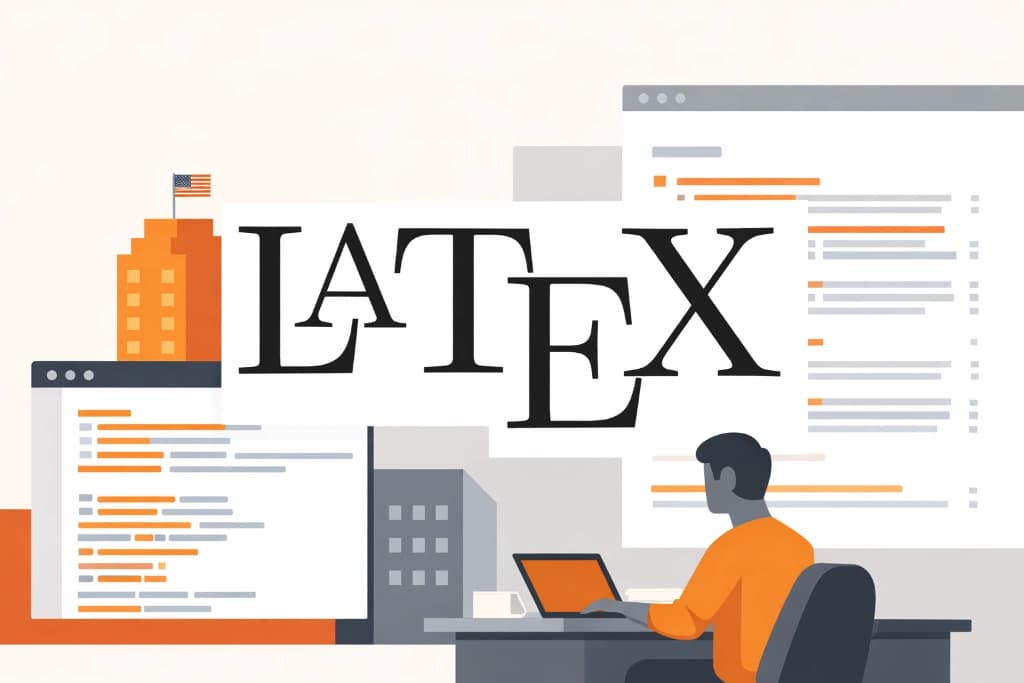
That reality may be changing. On January 27, 2026, OpenAI launched Prism, a free cloud-based workspace designed specifically for scientific researchers. Built on a recently acquired LaTeX platform called Crixet and powered by GPT-5.2, Prism integrates AI directly into the research writing workflow. While the tool targets scientists broadly, its implications for economists writing research papers are particularly significant. Economics sits at the intersection of technical rigor, mathematical formalism, and empirical complexity, and that makes it a discipline where AI-assisted writing tools could deliver outsized productivity gains.
OpenAI is the first major AI company to launch such a dedicated scientific workspace, but this first-mover advantage is unlikely to last. Competitors including Google DeepMind, Anthropic, Meta AI, and others are almost certainly developing similar tools. The race to become the default AI assistant for academic researchers is just beginning, and economists should expect a rapid evolution of features and capabilities across multiple platforms in the coming months.
What Is OpenAI Prism and Why Does It Matter for Economists?
At its core, Prism is a cloud-based LaTeX editor with an AI assistant embedded directly into the interface. Unlike using ChatGPT in a separate browser tab and copying text back and forth, Prism gives GPT-5.2 full access to your entire research project. The model can read your document structure, your equations, your references, and the surrounding context before generating suggestions. This contextual awareness is what separates Prism from generic AI writing assistants.
The tool is free for anyone with a ChatGPT account and offers unlimited projects and collaborators. OpenAI has announced that enterprise versions for universities and research institutions are coming soon through ChatGPT Business, Team, Enterprise, and Education tiers. For individual economists, particularly those at institutions without expensive site licenses for collaborative LaTeX tools, the zero-cost entry point is immediately attractive.
Kevin Weill, VP of OpenAI for Science, framed the launch with a bold prediction during the press announcement. He stated that 2026 will be for AI and science what 2025 was for AI and software engineering. The comparison to coding tools like Cursor and Windsurf is deliberate. Those platforms transformed how developers write code by integrating AI directly into the development environment. Prism aims to do the same for scientific writing, and economics papers, with their unique blend of mathematical models, econometric specifications, and data visualization, stand to benefit considerably.
The Unique Pain Points of Economics Paper Writing
Economists face a distinctive set of challenges when preparing papers for publication. Understanding these challenges helps clarify why an AI-powered LaTeX workspace could be transformative for the profession.
The main pain points that economists encounter during the paper writing process include:
- Mathematical notation and equation formatting: Economic theory papers are dense with optimization problems, equilibrium conditions, and derivations. Getting these equations to render correctly in LaTeX while maintaining visual consistency across a 40-page document is tedious and error-prone work.
- Empirical table formatting: Most economists run regressions in Stata, R, or Python, then export results to LaTeX. These tables rarely come out publication-ready and require extensive manual adjustment for column alignment, significance stars, and standard error formatting.
- Journal-specific formatting requirements: The American Economic Review, Quarterly Journal of Economics, Econometrica, and Journal of Political Economy all have different style guidelines. Switching journals after a rejection often means hours of reformatting.
- Bibliography management: Papers routinely cite 50 to 100 sources with economics-specific citation conventions. Managing BibTeX files and ensuring consistent formatting becomes a project in itself.
- Complex diagrams and visualizations: Game trees, supply and demand graphs, causal diagrams, and mechanism design illustrations require specialized LaTeX packages like TikZ with steep learning curves.
These challenges are not unique to economics, but the combination of mathematical rigor, empirical complexity, and strict publication standards makes the discipline particularly demanding. Any tool that can reduce friction in these areas represents a meaningful productivity improvement.
How Prism Addresses These Challenges
The features OpenAI has built into Prism target many of these pain points directly. While the tool is new and real-world usage patterns are still emerging, the announced capabilities suggest meaningful productivity improvements for economists preparing research papers.
The most powerful feature may be contextual AI assistance. When you open a chat window within Prism, GPT-5.2 has access to your entire project. You can ask it to check whether your empirical specification in Section 4 is consistent with the theoretical model in Section 2. You can request that it review your identification strategy and flag potential concerns. You can ask it to suggest relevant literature you may have missed. Because the model sees the full document, its responses are more relevant and more intelligent than what you would get from a standalone ChatGPT conversation.
Visual-to-code conversion is another notable feature. Prism can transform whiteboard sketches or hand-drawn diagrams into LaTeX code. For economists who struggle with TikZ or similar packages, this could dramatically lower the barrier to including high-quality visualizations in papers. Imagine sketching a game tree on an iPad and having it converted into clean, editable LaTeX within seconds.
The literature search and citation integration capabilities are also significant. The AI can search for relevant prior research and help incorporate citations directly into your manuscript. For economists conducting literature reviews or positioning their contribution within a crowded field, this accelerates a process that traditionally requires extensive manual searching through NBER working papers, SSRN, and journal archives.
Finally, real-time collaboration without version conflicts addresses a practical problem familiar to any co-author team. Economics papers are often written by two, three, or even four authors across different institutions. Managing who has the current version and reconciling simultaneous edits has been a persistent headache. Prism’s cloud architecture eliminates this friction entirely.
OpenAI Leads, But Competitors Will Follow
While OpenAI is the first to market with a dedicated AI workspace for scientific research, economists should not assume this tool will remain unique for long. The major AI companies are all investing heavily in specialized applications, and academic research represents a massive potential market.
Google DeepMind has already demonstrated strong capabilities in scientific reasoning with its Gemini models. Google’s existing integration with Google Docs, Google Scholar, and its broader productivity suite positions the company well to launch a competing research workspace. The combination of Gemini’s reasoning abilities with Google’s search infrastructure could produce a formidable alternative to Prism.
Anthropic, the company behind Claude, has focused heavily on safety and reliability in AI systems. For academic researchers concerned about accuracy and hallucination risks, an Anthropic-powered research tool could be particularly appealing. The company’s emphasis on careful and truthful AI outputs aligns well with academic standards for rigor and verification.
Meta AI has been aggressively open-sourcing its Llama models and could pursue a different strategy altogether, potentially enabling universities and research institutions to host their own AI-powered writing environments. This approach might appeal to institutions with strict data privacy requirements or those seeking to avoid dependence on any single commercial provider.
The competitive dynamics matter for economists evaluating these tools. Key factors to watch include:
- Integration with existing workflows: Which tools best connect with Stata, R, Python, Overleaf, Zotero, and other platforms economists already use?
- Accuracy and reliability: Which AI models produce the fewest hallucinations and errors in technical economic content?
- Pricing and institutional access: How will enterprise licensing work, and which universities will adopt which platforms?
- Specialization for economics: Will any provider develop features specifically tailored to econometric workflows and economics journal requirements?
- Data privacy and security: How will unpublished research be protected, and what are the terms of service regarding training data?
The next 12 to 18 months will likely see rapid iteration as these companies compete for adoption among academic researchers. Economists who remain informed about developments across multiple platforms will be best positioned to choose the tools that fit their specific needs.
The Limits of AI Assistance in Economic Research
OpenAI has been careful to position Prism as a copilot rather than an autonomous research agent. The tool is not designed to conduct research on its own, and that framing is important. For economists, understanding what AI cannot do is as critical as knowing what it can.
Theoretical innovation remains fundamentally human. Developing a novel economic model, identifying a new mechanism, or proposing a fresh theoretical framework requires creativity and intuition that current AI systems do not possess. Prism can help you format your model cleanly and check its internal consistency, but it cannot invent the model for you.
Causal identification is another area where human judgment is irreplaceable. The credibility revolution in economics has made identification strategy the most scrutinized element of any empirical paper. Whether you are using instrumental variables, regression discontinuity, difference-in-differences, or synthetic control methods, the validity of your approach depends on substantive economic reasoning about the data-generating process. An AI can flag potential concerns, but it cannot make the judgment calls that determine whether your identification is convincing.
Peer review and academic quality control remain essential. OpenAI explicitly warns that scientists remain responsible for verifying their references and ensuring accuracy. AI models can hallucinate citations, invent plausible-sounding but incorrect claims, and make logical errors. Any economist using Prism must treat AI-generated content as a first draft requiring careful verification, not as a finished product.
The broader point is that AI assistance changes the allocation of researcher time but does not eliminate the need for expertise. Economists who use these tools effectively will spend less time on formatting and more time on substance. But the substance still requires the training, intuition, and critical thinking that define professional competence in the field.
Implications for the Economics Job Market
For PhD candidates preparing their job market paper, tools like Prism could meaningfully affect the production process. The job market paper is the single most important document in an early-career economist’s portfolio. It must be polished, professionally formatted, and free of errors. Candidates typically revise their JMP dozens of times between September and January, and each revision cycle involves reformatting, bibliography updates, and table adjustments.
AI-assisted writing could accelerate these revision cycles substantially. A candidate could update regression results, ask the AI to regenerate affected tables, and have a clean new draft within hours rather than days. The time saved could be redirected toward improving the paper’s content, practicing presentations, or preparing for flyouts.
There are also implications for technical skill requirements in the profession. LaTeX proficiency has long been considered a basic competency for academic economists. If AI tools reduce the importance of manual LaTeX skills, the skill premium may shift toward other competencies. The ability to effectively prompt AI systems, verify AI-generated output, and integrate AI tools into research workflows could become more valuable than raw typesetting ability. This evolution parallels trends we have observed in other areas of in-demand skills for economists in 2026.
This raises potential equity concerns. Economists at well-resourced institutions may adopt these tools faster than those at under-funded departments or in developing countries. If AI assistance creates productivity advantages, existing inequalities in academic economics could widen. Monitoring how access and adoption patterns evolve will be important for understanding the distributional effects of AI on the profession.
Practical Considerations for Getting Started
Economists interested in trying Prism can access the tool at prism.openai.com with any existing ChatGPT account. The platform supports importing projects from Overleaf or local LaTeX installations, so transitioning existing work does not require starting from scratch.
Several practical recommendations emerge from early descriptions of the tool. First, start with a small project to understand how the AI interacts with your writing style and your field’s conventions. Economics has specific norms around notation, terminology, and argumentation that the model may or may not reflect accurately. Building familiarity before committing a major project is prudent.
Second, develop robust verification habits. Any AI-suggested citation should be independently confirmed. Any AI-generated equation or derivation should be manually checked. Any AI-written prose should be read critically for accuracy and appropriateness. These verification steps take time, but they are essential for maintaining academic integrity.
Third, consider how AI assistance fits into your collaboration workflow. If you are working with co-authors who have different comfort levels with AI tools, establishing shared norms about when and how to use Prism will prevent confusion and ensure consistent quality.
Fourth, stay informed about competing tools. As Google, Anthropic, and other providers launch their own research workspaces, switching costs may be low in the early stages. Experimenting with multiple platforms before committing to one could pay dividends.
The Future of Paper Writing
OpenAI Prism represents a significant step in the integration of artificial intelligence into academic research workflows. For economists specifically, the tool addresses longstanding pain points in paper preparation while preserving the human judgment essential to rigorous research. The combination of cloud-based LaTeX editing, contextual AI assistance, and collaborative features creates a platform well suited to the demands of modern economics publishing.
Yet this is only the beginning. OpenAI has established an early lead, but Google, Anthropic, Meta, and other AI companies will almost certainly follow with competing products. The landscape of AI-assisted research tools will look very different by the end of 2026 than it does today. Economists who engage early, experiment thoughtfully, and develop effective workflows will be best positioned to benefit as these tools mature.
Whether Prism or its eventual competitors deliver on their promise will depend on real-world usage patterns over the coming months. Early adopters in the economics community will provide valuable feedback on what works, what does not, and what improvements would make these tools more useful for the discipline’s specific needs. The intersection of AI and scientific writing is evolving rapidly, and economists have every reason to pay close attention.
For those building careers in economics, staying informed about tools like Prism is part of staying competitive in an evolving profession. The skills that define a successful economist are not changing, but the tools available to exercise those skills are expanding dramatically. Understanding and leveraging those tools wisely will matter more with each passing year.